
Yes, California law recognizes multiple defenses and diversion options for drug possession charges, but everything depends on what the prosecutor can actually prove under CALCRIM No. 2304. If you’re facing charges, avoid answering detailed questions from police, preserve any evidence that supports your side, and contact a California criminal defense attorney before your first court date. Firms specializing in criminal defense handle this exact situation daily.
TL;DR:
- Prosecutors must prove all five elements, including unlawful possession, knowledge of the drug’s presence and nature, a usable amount, and no valid prescription.
- PC 1000 can lead to dismissal for eligible first time or low level defendants; mental health diversion requires a qualifying condition tied to the offense.
- A successful motion to suppress can end the case; missing signatures, date gaps, mismatched evidence tags, or incomplete lab notes can weaken test results.
- A medical defense requires a prescription from an authorized provider, pharmacy records, and proof that the specific drug and quantity match what was dispensed.
Table of Contents
- What Counts as Possession Under California Law
- Penalties and Diversion: What You’re Actually Facing
- Common Defenses and How Each One Attacks the Prosecution’s Case
- Building the Case: What Prosecutors Use and What You Should Preserve
- Why Early Advocacy Changes Outcomes
- Talk to a Drug Defense Attorney Before Your Next Court Date
- FAQ
- Sources
What Counts as Possession Under California Law
Before you can fight a drug possession charge, you need to understand what the state actually has to prove. California recognizes two kinds of possession, and the distinction matters more than most defendants realize.
Actual possession means the drugs were found directly on your person, in your pocket, your hand, or your bag. Constructive possession is broader and far more contested: it applies when you had control over the location or container where the drugs were found, even if the substance never touched you. A locked glovebox in a car you were driving, a dresser drawer in an apartment you share with three roommates, a backpack that technically belongs to someone else sitting in your trunk. All of these can trigger a constructive possession charge, and all of them are where strong defenses tend to live.
CALCRIM No. 2304 lays out the five elements a prosecutor must prove beyond a reasonable doubt for a simple possession conviction under Health and Safety Code § 11350:
- You unlawfully possessed a controlled substance, whether actually or constructively.
- You knew of the substance’s presence in the location or on your person.
- You knew of the substance’s nature as a controlled drug, not just that something was there.
- The amount was usable, meaning enough to consume as a drug, not mere residue.
- You had no valid prescription authorizing you to possess it.
Miss any one of these elements and the case falls apart. That’s exactly why defense strategy so often targets knowledge and control rather than the substance itself; the lab report rarely changes, but whether you knew what you were near or holding frequently does.
Consider three scenarios. In the glovebox case, if you borrowed the car an hour before the stop and never opened the glovebox, the prosecution has a real problem proving knowledge. In the shared apartment case, if the drugs were found in a roommate’s room that you had no key to and no reason to enter, constructive possession becomes difficult to establish. In the purse case, if the bag and its contents belonged to a passenger and you had never touched it, actual possession simply isn’t there, and constructive possession requires proof of control you may never have had.
There’s also a narrow doctrine sometimes called the “momentary possession” defense, rooted in California case law including the reasoning in People v. Martin, which discusses the Mijares line of cases. This defense applies only in very limited situations: when someone briefly holds a substance solely for the purpose of disposing of it or abandoning it, with no intent to use or retain it. Courts have kept this defense narrow, so it rarely applies outside a short window of transitory handling, such as grabbing a dropped item to throw it away.
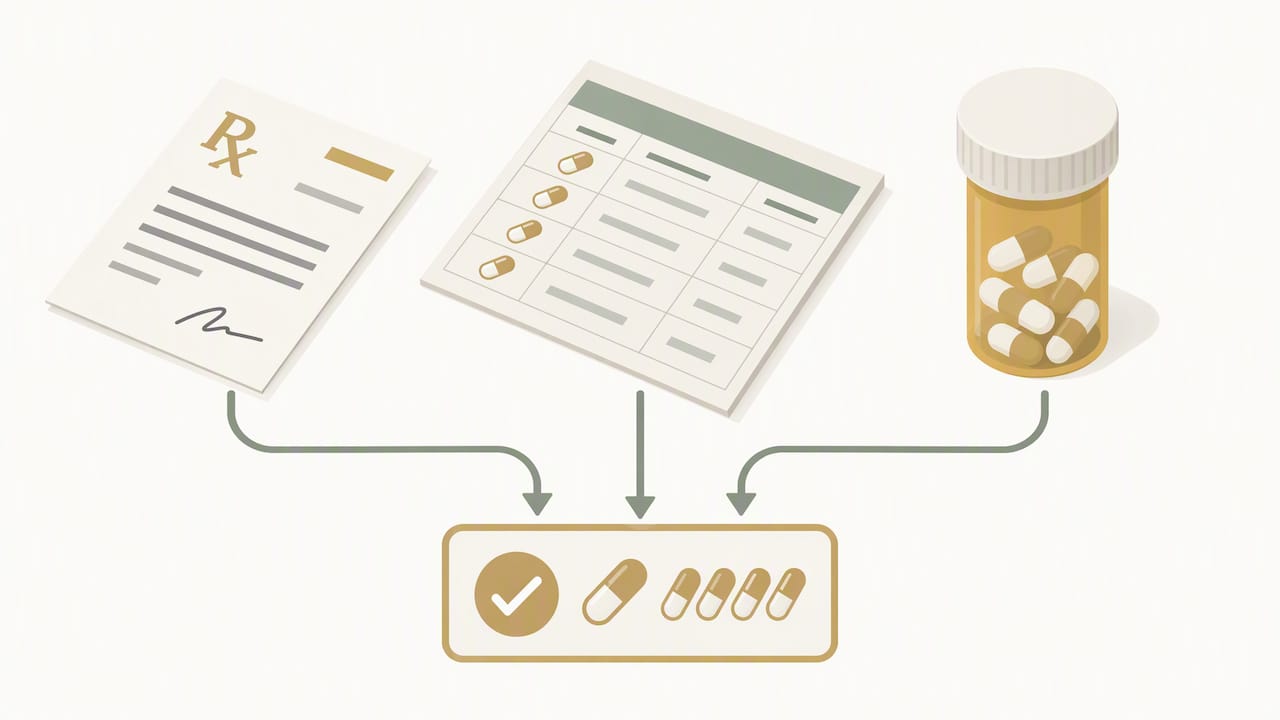
Finally, the prescription element matters more than people expect. California law only recognizes a defense based on a prescription issued by someone legally authorized to prescribe controlled substances, typically a licensed physician, and the prescription has to cover the specific substance and quantity found. A defense built on a valid prescription requires pharmacy records, the prescribing provider’s documentation, and proof the quantity possessed matches what was lawfully dispensed. A verbal claim that “it’s my medication” without paperwork rarely survives scrutiny.
Penalties and Diversion: What You’re Actually Facing
Simple possession under HSC § 11350 is typically charged as a misdemeanor in California, carrying exposure to county jail time and fines, though the statute also allows for felony treatment and enhanced penalties tied to prior convictions and specific aggravating conditions. The exact exposure depends heavily on your criminal history, the substance involved, and whether any aggravating factors are present in the charging decision.
One of the more significant shifts in recent California drug law is the expansion of treatment-first options under SB-250, which codifies treatment-mandated felony procedures and adds limited immunities tied to overdose reporting and voluntary drug surrender.
SB-250 does more than adjust sentencing. It establishes a treatment-mandated felony framework that lets courts order substance abuse evaluations and require participation in a treatment program instead of incarceration for eligible defendants, with successful completion potentially leading to dismissal. It also adds good-faith immunity provisions protecting someone who seeks medical help during an overdose from prosecution for simple possession tied to that event, along with confidentiality protections for voluntarily surrendering suspected-adulterated substances to law enforcement or public health officials.
Beyond SB-250, several diversion paths exist depending on your charge and history:
- PC 1000 diversion allows eligible first-time or low-level drug possession defendants to complete a program in exchange for dismissal, avoiding a conviction entirely.
- Misdemeanor diversion offers a broader pretrial path for qualifying misdemeanor charges, with eligibility turning on criminal history and the specific charge.
- Mental health diversion under PC 1001.36 applies when a qualifying mental health condition contributed to the offense and treatment is deemed appropriate by the court.
These programs exist because a conviction carries consequences that extend well past the courtroom. A drug possession record can affect immigration status, professional licensing, and employment background checks for years. Diversion that results in dismissal avoids most of that collateral damage, which is why eligibility screening early in a case matters as much as the defense strategy itself.
Common Defenses and How Each One Attacks the Prosecution’s Case
Every drug possession case has weak points, and the strongest defense strategy usually targets the specific element the prosecution is least able to prove. According to FindLaw’s overview of California drug possession laws, several defense strategies come up again and again across California courts.
- Illegal search and seizure. If police stopped you without reasonable suspicion, searched without a warrant or valid consent, or exceeded the scope of a lawful search, the evidence found can be challenged through a suppression motion. A successful motion to suppress often ends the case, since without the physical evidence, the prosecution has nothing left to prove possession.
- Lack of possession or control. This defense attacks constructive possession directly, using testimony, lease agreements, or witness statements to show that someone else had actual control over the location or item where drugs were found.
- Lack of knowledge. Even when possession is established, the prosecution still has to prove you knew the substance was present and knew its nature. Evidence that you borrowed an item, had no access to a space, or had no reason to inspect a container can defeat this element.
- Prescription or medical-use defenses. A valid prescription from an authorized provider, matched to the exact substance and quantity, can defeat the charge outright. The limits here matter: expired prescriptions, mismatched dosages, or prescriptions for a different person don’t qualify.
- Lab and chain-of-custody problems. Crime labs make mistakes, including sample mix-ups and incomplete documentation. Defense counsel can demand the raw testing data, challenge the chain-of-custody paperwork, and in some cases push for independent retesting.
- Entrapment and Miranda issues. If law enforcement induced conduct a person wouldn’t otherwise have engaged in, or obtained a confession without proper Miranda warnings during custodial interrogation, that evidence or statement may be suppressed.
Pro Tip: Write down everything you remember about the stop and search within 24 hours, including exact statements officers made and whether you were asked for consent, while the details are still fresh.
None of these defenses work in isolation from the facts. A case built on an illegal stop and weak lab documentation is a very different fight than one built on a shared apartment and a disputed prescription, which is why evidence review has to happen before a strategy gets chosen.
Building the Case: What Prosecutors Use and What You Should Preserve
A drug possession case typically rests on a narrow set of evidence: the arresting officer’s report, the physical substance seized, a lab certificate confirming the substance’s identity, and sometimes surveillance footage, witness statements, or phone and location data tying a person to the scene. Each piece has a paper trail, and that paper trail is where cases are often won or lost.
Chain of custody is the record showing who handled the seized substance from the moment of seizure through lab testing and storage. A broken chain, a missing signature, a gap in dates, or mismatched evidence tags, can undermine the reliability of the lab result even when the substance itself tested positive. Lab testing carries its own risks: sample mix-ups between cases, incomplete documentation of testing protocols, and reliance on outdated testing methods all show up in real cases. When the stakes justify it, independent retesting can confirm or contradict the state’s result.
There are concrete steps worth taking right away if you’re facing charges:
- Keep every piece of arrest paperwork, including the citation, booking documents, and any receipt for property seized.
- Photograph your belongings and the scene if you’re able to, before anything is moved or lost.
- Write down the names and contact information of any witnesses present during the stop or search.
- Preserve phone and device data rather than deleting anything, since location history can support or undercut a possession claim.
- Request discovery promptly through your attorney so lab reports and officer notes can be reviewed before deadlines pass.
Pro Tip: Ask your attorney to request the lab’s underlying bench notes, not just the final certificate, since raw testing data often reveals errors the summary report doesn’t show.
Early legal action tends to shape everything that follows. Motions to suppress illegally obtained evidence, formal discovery requests, and negotiated diversion applications all happen before trial, often before an arraignment deadline passes. A guide to preserving evidence after an illegal search walks through the specific steps that protect a suppression argument from the earliest stage of a case.
Why Early Advocacy Changes Outcomes
The biggest mistake we see in drug possession cases is waiting. Prosecutors form an impression of a case within the first few weeks, often before a defense attorney has even reviewed the discovery file, and that early impression is hard to reverse later.
A mitigation packet built before charges are finalized, one that gives a prosecutor the full context of a person’s circumstances rather than a one-line police summary, can shift a charging decision. Pairing that early work with targeted discovery requests and a review of search and seizure issues gives a case its best shot before it ever reaches a courtroom. We’ve built our approach around that timing, using two attorneys on every case so search issues, lab evidence, and diversion eligibility all get reviewed in parallel rather than one after another.
— Jake
Talk to a Drug Defense Attorney Before Your Next Court Date

Facing a drug possession charge in California means decisions made in the first few days, what you say, what you preserve, who you call, often matter more than anything that happens in court later. Our drug offenses defense services pair two attorneys with every case, backed by former law enforcement professionals who know how search, seizure, and lab evidence actually get built and challenged. We use detailed mitigation packets to give prosecutors a fuller picture of a client’s situation before charges harden into a plea offer.
If you’re preparing for a first consultation, bring what you can:
- Any arrest or citation paperwork you received.
- Bail documentation and court date notices.
- A copy of the police report, if you have one.
- Prescription records, if a medical-use defense applies to your case.
- Names and contact information for any witnesses.
Call our office or reach out through the contact form on our criminal defense page to schedule a consultation and walk through your options with us directly.
This article is general information, not a substitute for advice from a qualified lawyer. Consult a qualified legal professional about your own circumstances before acting on anything here.
FAQ
Can you beat a possession charge?
Yes, a possession charge can be beaten when the prosecution cannot prove every element under CALCRIM No. 2304, including knowledge, control, and a usable amount. Common paths include suppression of illegally obtained evidence, challenging constructive possession, or qualifying for diversion that results in dismissal.
Did California decriminalize drugs?
No, California has not decriminalized simple drug possession statewide; it remains chargeable under HSC § 11350. Recent legislation like SB-250 has expanded treatment-first alternatives and limited immunities tied to overdose reporting, but possession itself remains a criminal offense.
What are the penalties for felony theft in California?
Felony theft penalties depend on the value of property taken and the defendant’s criminal history, and they fall under separate theft statutes rather than the drug possession laws covered here. A criminal defense attorney can evaluate the specific charge and prior record to assess likely exposure in a theft case.
Which states have the toughest drug laws?
Drug law severity varies widely by state and by substance, and no single ranking applies uniformly across offense types; for insight into how DUIs have trended in states with legalized marijuana, see Are DUIs in pot-legal states increasing? California’s framework, including diversion programs and treatment-first provisions under SB-250, is generally considered more treatment-oriented than states relying primarily on mandatory incarceration.
Sources
- CALCRIM No. 2304. Simple Possession of Controlled Substance (Health & Saf. Code, §§ 11350, 11377)
- California Health and Safety Code § 11350
- California drug possession laws overview — FindLaw