
Facing vandalism charges can be an overwhelming experience that leaves you worried about your future and your freedom. If you are wondering if vandalism charges can be dropped, the answer is yes, but it requires a proactive legal strategy and an understanding of how the justice system works. At Grace Legal Group, we specialize in helping individuals navigate these stressful moments and work toward getting their lives back on track.
Understanding Vandalism: Why You Were Charged
Vandalism is often misunderstood as a minor prank, but the legal system views it as a serious interference with property rights. Generally, it is defined as the willful or malicious destruction, defacement, or damage of someone else’s property.
Legal Definition of Vandalism and Property Damage
To secure a conviction, a prosecutor must prove that you damaged property that didn’t belong to you and that you did so “maliciously.” This means you intended to do the act, even if you didn’t necessarily intend to break the law. Common examples include graffiti, “keying” a car, or breaking a window.
Felony vs. Misdemeanor: The Valuation Threshold
One of the most important factors in your case is the dollar amount of the damage. In many states, if the damage is under a certain amount (often $400), it is charged as a misdemeanor. If the damage exceeds that amount, it can be elevated to a felony. A felony conviction carries much harsher penalties, including potential prison time and a permanent mark on your record that can prevent you from getting certain jobs.
Common Scenarios: Graffiti, Keying Cars, and “Pranks” Gone Wrong
Many vandalism cases stem from emotional outbursts or youthful indiscretions. Whether it was a “tagging” incident or damage done during a heated argument with a partner, the law treats these actions as criminal offenses. However, the context of the incident often provides the “hooks” a defense attorney needs to fight the charges.
Can Vandalism Charges Actually Be Dropped?
The short answer is yes, charges can be dropped before a trial even begins. However, this rarely happens automatically. It usually requires your attorney to present evidence or negotiate a deal that satisfies the court.
The Difference Between Dropped Charges and a Dismissal
While people use these terms interchangeably, they are legally different. “Dropped” charges usually happen when a prosecutor decides not to move forward with the case early on. A “dismissal” typically happens after the case has been filed, often because a judge determines there isn’t enough evidence or because you completed a specific program.
Who Has the Power to Drop Charges?
A common myth is that the “victim” can choose to drop the charges. In reality, once the police are involved, the case belongs to the State. Only the Prosecutor or the District Attorney has the power to drop the charges. Even if the property owner tells the police they no longer want to prosecute, the State can still move forward. This is why having a firm like Grace Legal Group to negotiate with the prosecutor is vital.
Proven Legal Defenses to Fight the Charge
To get charges dropped, your legal team will look for holes in the prosecution’s case.
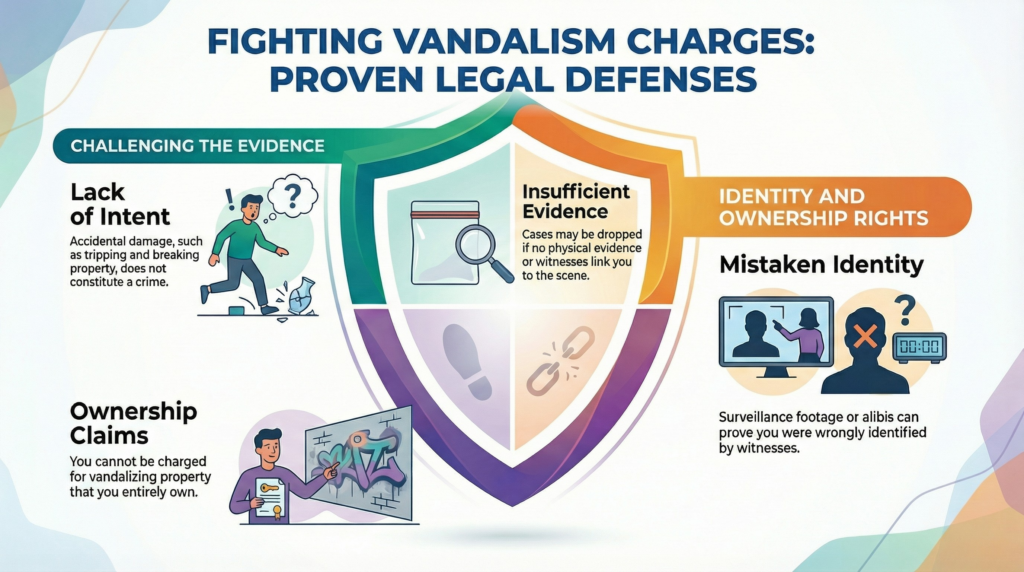
- Lack of Intent: If the damage was accidental—such as tripping and knocking over a valuable vase—it is not vandalism.
- Mistaken Identity: Eyewitnesses are often wrong. If you were simply in the wrong place at the wrong time, we can use alibis or surveillance footage to prove you weren’t the one responsible.
- Ownership Claims: You cannot “vandalize” property that you own entirely. If the property was yours or if you had a “claim of right” to it, the charges may not hold up.
- Insufficient Evidence: If there are no witnesses and no physical evidence linking you to the scene, the prosecutor may be forced to drop the case.
Proactive Steps to Get Charges Dropped Before Trial
Sometimes, the best defense isn’t arguing what happened, but fixing the situation before it gets to a judge.
Civil Compromise: Paying Restitution in Exchange for Dismissal
In many misdemeanor cases, your lawyer can negotiate a “Civil Compromise.” This is an agreement where you pay the victim for the full cost of the repairs. If the victim is made “whole” and signs a declaration saying they are satisfied, the judge has the power to dismiss the criminal charges entirely.
Pre-Trial Diversion Programs for First-Time Offenders
If this is your first brush with the law, you may be eligible for a diversion program. These programs typically require you to perform community service, attend counseling, and stay out of trouble for a set period (usually 6 to 12 months). If you complete the requirements, the charges are dismissed, and you won’t have a conviction on your record.
Voluntary Remediation
Showing “good faith” goes a long way. Fixing the damage or painting over graffiti before your first court date shows the court that you are taking responsibility. This can make a prosecutor much more likely to offer a favorable deal or a dismissal.
Juvenile Vandalism: Special Considerations for Minors
When a minor is charged, the goal of the court shifts from punishment to rehabilitation.
- The Informal Probation Path: Many juveniles can avoid a formal “record” by entering into informal probation, where the case is held in suspension while the minor completes specific tasks.
- Impact on Driver’s Licenses: In many states, a vandalism conviction can lead to a one-year suspension of a minor’s driver’s license—even if a car wasn’t involved in the crime.
- Parental Liability for Damages: Parents should be aware that they are often legally responsible for the financial costs of their child’s vandalism. This can lead to civil lawsuits if the restitution isn’t handled through the criminal case.
Constitutional Violations: Technicalities That Matter
Sometimes charges are dropped because the police didn’t follow the rules. If your home or car was searched without a warrant (Illegal Search and Seizure) or if you were questioned while in custody without being read your rights (Miranda Violations), the evidence against you might be “suppressed.” Without that evidence, the prosecutor often has no choice but to drop the charges.
The Long-Term Impact: Why You Should Fight Every Charge
Even a “minor” vandalism charge can follow you for years if it isn’t handled correctly.
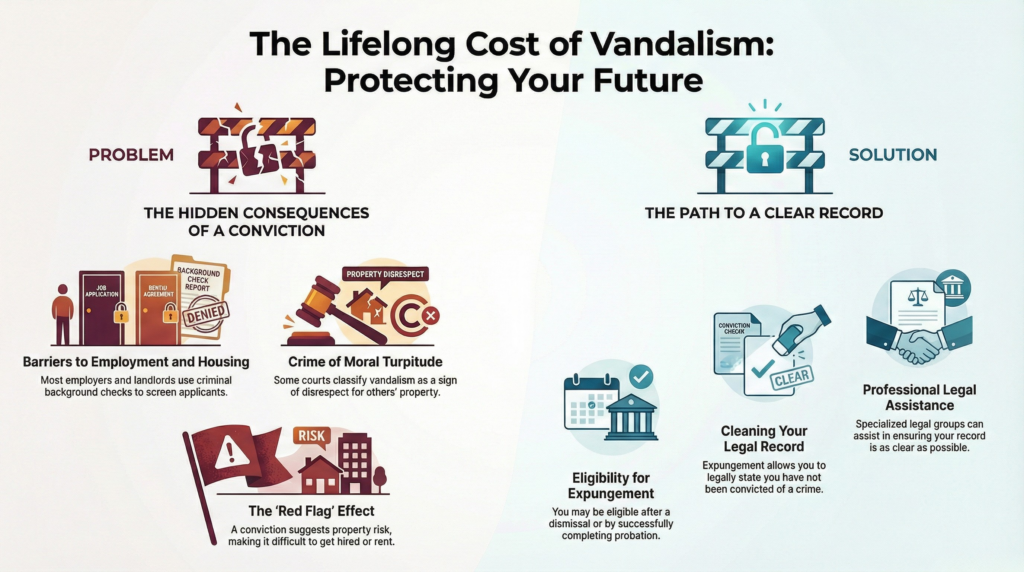
Employment Background Checks and Housing
Most employers and landlords run criminal background checks. A conviction for a “crime of moral turpitude” (which some courts consider vandalism to be) can make it difficult to get hired or rent an apartment. It suggests a lack of respect for others’ property, which is a red flag for many companies.
Expungement: Cleaning Your Record After a Dismissal
If your charges are dismissed or if you complete probation, you may be eligible for an expungement. This “cleans” your record so that when you apply for a job, you can legally state that you have not been convicted of a crime. Grace Legal Group can assist you in ensuring your record is as clear as possible.
Frequently Asked Questions
Can the victim drop the charges if they changed their mind?
No. Only the prosecutor can drop the charges. However, if the victim informs the prosecutor they no longer wish to cooperate, it makes the case much harder for the State to win, which often leads to a dismissal.
What if I already confessed to the police?
A confession doesn’t mean your case is over. If the confession was coerced or if your rights were violated during the interrogation, your attorney may be able to have the confession thrown out of court.
Will I go to jail for a first-time vandalism charge?
For most first-time misdemeanor offenses, jail is unlikely if you have a strong legal defense. Often, we can negotiate for fines, restitution, and community service instead of time behind bars.
How much does a vandalism lawyer cost?
The cost varies based on the complexity of the case. However, the cost of a lawyer is often much lower than the long-term “cost” of a criminal record, which can lead to lost job opportunities and higher insurance rates.
Can I join the military with a vandalism conviction?
A felony vandalism conviction is usually a disqualifier for military service. A misdemeanor may require a “moral waiver.” This is why it is so important to fight to have the charges dropped or reduced.
Does the property owner have to see me do it?
No. The prosecutor can use “circumstantial evidence,” such as your DNA, fingerprints, or even cell phone GPS data, to prove you were at the scene.
Protect Your Future with Grace Legal Group
A single mistake shouldn’t define the rest of your life. At Grace Legal Group, we believe in “Grace over punishment.” Our experienced defense team knows how to negotiate with prosecutors, identify constitutional violations, and build a strategy to get your vandalism charges dropped or dismissed.
Don’t wait until your court date to start your defense. Contact Grace Legal Group today for a free consultation and let us help you find your second chance.