
A DMV hearing after a DUI arrest is your one real shot at keeping your license before suspension kicks in. This is not a criminal trial. The California DMV conducts what’s called an Administrative Per Se (APS) hearing, a separate administrative proceeding focused entirely on your driving privilege, not on whether you’re guilty of a crime. The hearing officer reviews a narrow set of evidence: the arresting officer’s report, your blood alcohol content (BAC) results, whether the arrest was lawful, and whether you refused or failed to complete a chemical test.
Here’s what the process looks like at a glance:
- You have a short deadline after receiving the suspension notice to request a hearing or your license is automatically suspended.
- The hearing is administrative, not criminal. Your guilt or innocence is not on the table.
- A DMV hearing officer, not a judge, presides over the proceeding.
- Possible outcomes: the suspension is upheld, or it is set aside and your license is returned.
- The DMV hearing runs parallel to your criminal DUI case. One does not control the other.
How do you request a DMV hearing for a DUI?
The clock starts the moment you receive your Notice of Suspension. California law requires you to contact the DMV within a limited time period to request a hearing. Miss that window and the suspension goes into effect automatically, with no further opportunity to contest it at this stage.
Here’s how to submit your request:
- Phone: Call your local Driver Safety Office directly. Get the name of the person you spoke with and the time of the call.
- Fax: Send a written request to the Driver Safety Office. Keep the fax confirmation as proof.
- In person: Visit a Driver Safety Office location. Ask for a stamped receipt.
- Online: Some California DMV Driver Safety Offices accept online requests. Confirm availability for your county.
When you request the hearing, have your Notice of Suspension, your driver’s license number, and your contact information ready. The DMV will assign a hearing date and send you written confirmation. That confirmation is your proof the request was accepted.
Pro Tip: Save every piece of documentation from your hearing request: confirmation numbers, fax receipts, call logs. If the DMV later claims no request was received, that paper trail is your only defense against automatic suspension.
Requesting the hearing also typically extends your temporary driving privilege while you wait for the hearing date. That alone makes the 10-day deadline worth treating as an emergency.
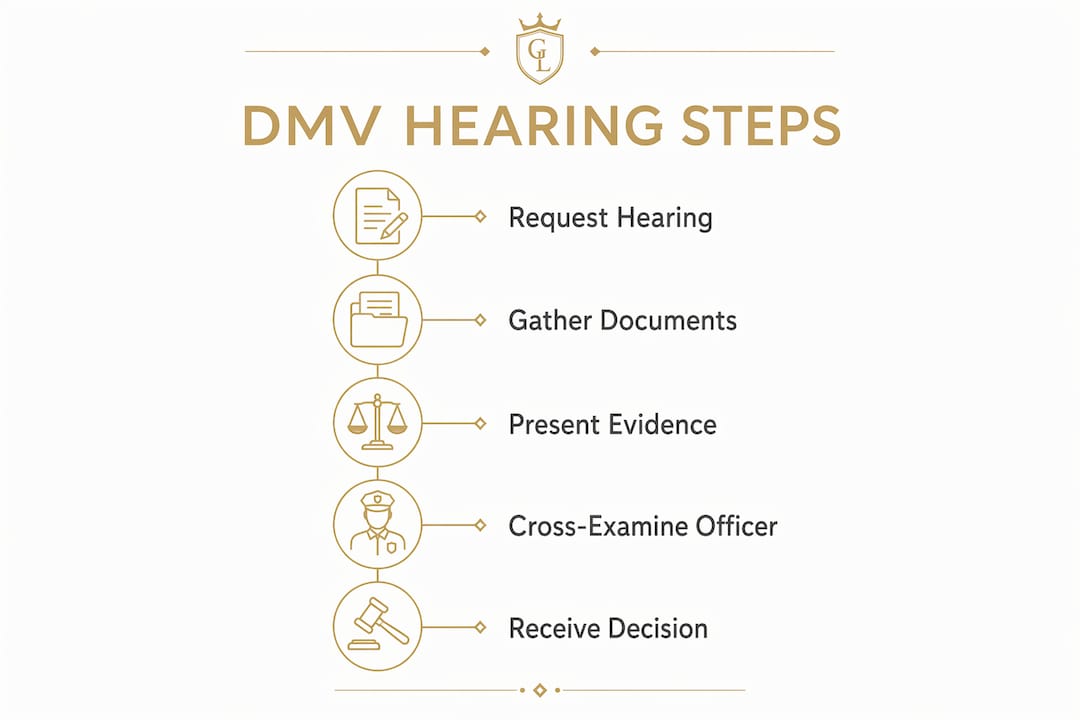
What happens during a DMV DUI hearing?
The hearing is less formal than a courtroom, but it carries real consequences. It can be conducted remotely or in person at a Driver Safety Office, and the entire session is recorded. A DMV hearing officer presides, not a judge. Hearing officers are DMV employees who typically do not hold law degrees, but they are trained to apply Vehicle Code provisions strictly.
What the hearing covers:
- Did the officer have reasonable cause to believe you were driving under the influence?
- Were you lawfully arrested?
- Was your blood alcohol concentration at or above the legal limit at the time of driving?
- If you refused testing: were you properly advised of the consequences before refusing?
What the hearing does not cover:
- Whether you are criminally guilty of DUI
- Mitigating circumstances unrelated to the arrest
- Your driving history or character
You have the right to present evidence, call witnesses, and cross-examine the arresting officer if they appear. The hearing officer weighs the evidence on a preponderance standard, meaning they decide what is more likely true than not. After the session, the officer typically takes the matter under submission rather than ruling on the spot.
How do you prepare for a DMV hearing and what defenses work?
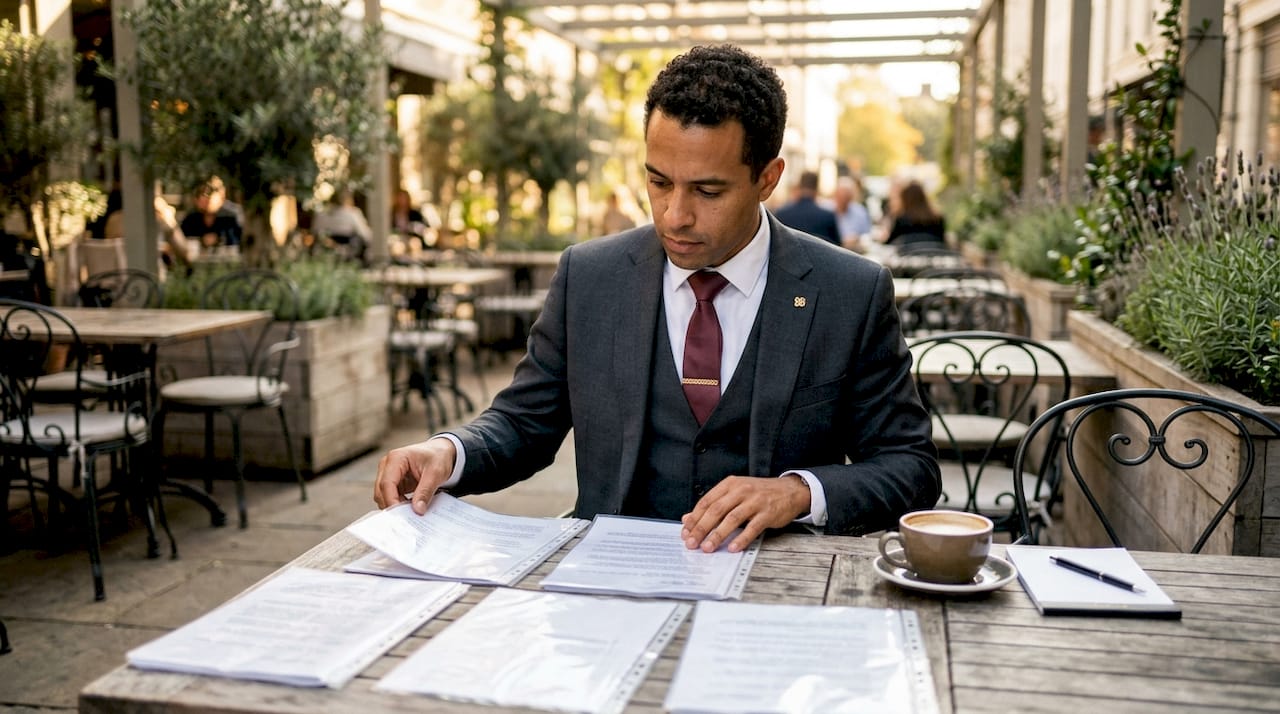
Preparation is where most people either gain ground or lose it before the hearing even starts. Pull together every document related to your arrest: the Notice of Suspension, the arresting officer’s report, any chemical test results, and the police report if you can obtain it. Read them carefully for inconsistencies.
Common defenses that carry weight at DMV hearings:
- Lack of reasonable cause for the stop. If the officer had no valid reason to pull you over, the entire basis for the suspension may collapse. Understanding what officers look for at a DUI stop helps identify whether the stop was legally justified.
- Improper breathalyzer calibration. Breath testing devices must be maintained and calibrated on a documented schedule. A device out of calibration produces unreliable results.
- Failure to observe for 15 minutes before testing. California Highway Patrol policy requires officers to observe a driver for 15 minutes before administering a breath test to rule out mouth alcohol contamination. Skipping or shortening that window is a procedural error.
- Unlawful arrest. If the arrest itself was not conducted properly under California Vehicle Code, the suspension may not be justified.
- Blood test chain of custody issues. If a blood sample was improperly stored, labeled, or handled, the results may be challenged.
Pro Tip: Keep your testimony short and focused. Hearing officers respond to procedural facts, not personal explanations. Practicing your answers out loud before the hearing helps you stay concise under pressure.
Consulting a DUI defense attorney before your hearing is the single most effective preparation step. An attorney can subpoena the officer’s calibration records, review the arrest report for errors, and frame your defense around the specific Vehicle Code issues the hearing officer is authorized to decide.
How does the DMV hearing relate to your criminal DUI case?
These are two completely separate proceedings, and confusing them is one of the most common mistakes people make after a DUI arrest. The DMV hearing addresses only your driving privilege. The criminal court case addresses whether you violated the law and what penalties apply.
Key distinctions:
- A DMV hearing officer who sets aside your suspension cannot dismiss your criminal charges. The decision is independent of any criminal sanction or penalty.
- Winning at the DMV hearing does not mean you won’t be convicted in criminal court, and vice versa.
- Both processes run simultaneously. You may attend a DMV hearing while your criminal case is still pending.
- Statements made at the DMV hearing can potentially be used in the criminal proceeding, which is one reason having an attorney present at both matters.
The practical takeaway: treat each proceeding on its own terms. Your DMV hearing defense focuses on procedural and evidentiary issues under the Vehicle Code, while your criminal defense addresses the broader question of guilt. A good outcome at one does not guarantee a good outcome at the other, but a strong showing at the DMV hearing can preserve your ability to drive while the criminal case plays out.
What happens if you lose the DMV hearing?
Losing means the hearing officer upholds the suspension. The suspension typically takes effect shortly after the written decision is issued. For a first-offense DUI with a BAC of 0.08% or higher, the standard suspension period under California law is four months. Refusal to test carries a one-year suspension for a first offense.
Your options after an unfavorable decision:
- Apply for an Ignition Interlock Device (IID) restriction. The California DMV offers IID programs that allow you to drive with a device installed in your vehicle that requires a clean breath sample before the car starts. This is often available immediately after suspension begins.
- Apply for a restricted license. Depending on your circumstances, you may qualify to drive to and from work, school, or a DUI program during the suspension period.
- Appeal the decision. You can petition the superior court for a writ of mandate to challenge the hearing officer’s ruling. This is a formal legal process with its own deadlines and procedural requirements.
- Comply with all DMV requirements. Driving on a suspended license compounds your legal exposure significantly. Stay compliant while you pursue your options.
The insurance impact is real and worth planning for. A DUI suspension on your DMV record typically triggers a substantial rate increase from your auto insurer, and some carriers will drop coverage entirely. Enrolling in a court-ordered or voluntary DUI program, such as the AB 541 program for first-time offenders in Los Angeles County, can sometimes help demonstrate responsibility to both the court and your insurer.
How long does the DMV hearing process take?
The timeline has several distinct phases, and knowing them helps you plan around the suspension.
- Requesting the hearing must happen within a short, legally mandated deadline after receiving the suspension notice.
- Waiting for a hearing date varies by location and caseload; scheduling delays are common in high-volume areas.
- The hearing itself lasts a variable amount of time depending on case complexity.
- Hearing officers issue a written ruling several weeks after the hearing date.
- Suspension or reinstatement follows the ruling as appropriate.
The temporary driving privilege granted when you request the hearing usually remains in effect until the hearing officer issues a decision. That means requesting the hearing promptly can buy you weeks or months of continued driving while the process unfolds.
Can a DUI be removed from your DMV record?
The short answer is: partially, and it depends on which record you mean. There are two separate records at play after a DUI: your criminal record and your DMV driving record. They are not the same thing, and clearing one does not automatically clear the other.
Under California Penal Code 1203.4, you may be eligible to expunge a DUI conviction from your criminal record after completing probation. Expungement withdraws your guilty plea and dismisses the case, which can benefit employment background checks. However, the DMV retains its administrative record of the suspension separately, and expungement does not erase that record.
What this means practically:
- Your DMV driving record will continue to show the suspension for the statutory retention period, regardless of criminal expungement.
- If you believe there is an error on your DMV record, you can request a review or correction through the DMV’s formal process.
- The duration a DUI stays on your record varies depending on whether you’re looking at the DMV record, the criminal record, or how insurers access driving history.
Insurance companies often pull your Motor Vehicle Report (MVR) directly from the DMV, which means the suspension history may affect your rates even after a criminal expungement. Setting realistic expectations here matters: expungement is worth pursuing for employment purposes, but it is not a clean slate for driving-related consequences.
Expert legal insights on winning your DMV DUI hearing
The attorneys at Gracelegalgroup have handled enough of these hearings to know what actually moves the needle. The hearing officer’s authority is narrow by design. They apply Vehicle Code provisions and nothing else. Attempts to argue that you’re a good person, that the arrest was unfair in a general sense, or that the criminal case is weak have no effect on the outcome.
What does work:
- Targeting procedural errors in the officer’s report. Inconsistencies between the arrest report and the officer’s testimony, or gaps in the documentation, create doubt about whether the statutory grounds for suspension are met.
- Challenging breathalyzer calibration records. Subpoenaing the maintenance logs for the device used in your test is a concrete, evidence-based challenge that hearing officers are required to consider.
- Documenting the 15-minute observation failure. If the officer’s own report does not confirm the required observation period, that is a procedural defect under CHP testing policy that can undermine the BAC result.
- Staying procedural throughout. Hearing officers respond to arguments grounded in the Vehicle Code. Emotional appeals or broad criminal defense arguments fall outside their jurisdiction and waste your limited time.
Pro Tip: Gracelegalgroup uses detailed mitigation packets that document case-specific procedural errors, officer report inconsistencies, and test administration failures. This kind of organized, evidence-first presentation is what separates a prepared hearing from an improvised one.
The value of having two attorneys on your case, as Gracelegalgroup provides, shows up clearly at the DMV hearing stage. One attorney can focus on the administrative record while the other tracks the parallel criminal proceedings, so nothing falls through the cracks. You can explore DUI defense strategies specific to California license protection on the Gracelegalgroup site.
Can you appeal a DMV hearing decision?
Yes, and the process is more formal than the hearing itself. If the hearing officer upholds your suspension and you believe the decision was legally wrong, you can file a petition for writ of mandate in the California Superior Court. This is not a new hearing. The court reviews whether the DMV hearing officer followed the law correctly, based on the administrative record from the original hearing.
The appeal process works like this:
- Obtain a copy of the hearing transcript and the officer’s written decision.
- File a petition for writ of mandate in the superior court for the county where the hearing was held.
- The court reviews the administrative record and determines whether the DMV’s decision was supported by the evidence and consistent with the law.
- If the court finds an error, it can order the DMV to set aside the suspension.
Deadlines for filing the writ petition are strict. Missing them forfeits your right to appeal. An experienced DUI defense attorney can assess whether the hearing officer made a reviewable legal error and whether an appeal is worth pursuing given the facts of your case.
What are your rights during a DMV hearing?
The DMV hearing is an administrative proceeding, but you retain meaningful rights throughout. The California Constitution’s due process protections apply: you received notice of the action against your driving privilege, and you have the right to be heard before that action takes effect.
Your specific rights at the hearing include:
- The right to be represented by an attorney. You can bring legal counsel to the hearing. The DMV does not provide one, but you are entitled to have your own.
- The right to review the evidence. You can request and review the DMV’s evidence file before the hearing, including the officer’s report and chemical test results.
- The right to present evidence. You may submit documents, records, and other evidence relevant to the statutory issues the hearing officer is deciding.
- The right to call and cross-examine witnesses. If the arresting officer is subpoenaed and appears, you or your attorney can question them directly.
- The right to a recorded hearing. The session is recorded, which creates a record that can be used in any subsequent appeal.
- The right to a written decision. The hearing officer must issue a written ruling explaining the basis for the decision.
You are not required to request a hearing at all. The DMV hearing is optional. But waiving it means accepting automatic suspension without any opportunity to contest the evidence.
What documents should you bring to the DMV hearing?
Arriving organized makes a concrete difference. The hearing officer works from a specific administrative record, and your job is to supplement or challenge that record with your own documentation.
Bring the following:
- Notice of Suspension (the pink temporary license the officer gave you at arrest)
- Arrest report and police report (request these from the arresting agency before the hearing)
- Chemical test results (breath, blood, or urine test documentation)
- Breathalyzer calibration and maintenance records (if subpoenaed)
- Officer’s personnel records (if relevant to credibility challenges and obtainable)
- Any witness statements supporting your version of events
- Medical records if a medical condition affected your BAC reading or field sobriety performance
- Proof of hearing request (your confirmation from the DMV)
- Your attorney’s notes or prepared arguments if you are represented
Organize everything chronologically and label each document clearly. The hearing officer moves quickly, and a disorganized presentation wastes the limited time you have. If you are pursuing a defense based on breathalyzer calibration or the 15-minute observation period, those specific records should be at the top of your stack.
Working with Gracelegalgroup on your DMV hearing

A DMV hearing for DUI is winnable, but only if you walk in prepared. Gracelegalgroup’s Los Angeles-based criminal defense attorneys bring former law enforcement experience to every case, which means they know exactly how to read an officer’s report for procedural gaps and how to frame those gaps as legal defenses. With two dedicated attorneys on each case, Gracelegalgroup handles both the DMV administrative process and the parallel criminal proceedings simultaneously, so your defense stays coordinated from day one.
If you’re facing a license suspension and need to understand your available criminal defenses, or if you want to discuss your DMV hearing strategy directly, contact Gracelegalgroup for a consultation. The 10-day deadline moves fast.
Key Takeaways
The DMV hearing after a DUI arrest is an administrative proceeding focused on your driving privilege, not criminal guilt, and winning it requires procedural precision, not broad criminal defense arguments.
| Point | Details |
|---|---|
| Deadline to request hearing is strict | Request your DMV hearing promptly after receiving the suspension notice or suspension is automatic. |
| Hearing scope is narrow | The officer reviews only the lawfulness of the arrest, blood alcohol test results, and test refusal, not criminal guilt. |
| Written decision timing varies | Hearing officers typically issue a written ruling within a few weeks after the hearing. |
| Expungement doesn’t clear DMV records | A criminal expungement does not erase the DMV’s administrative suspension record. |
| IID restriction is available post-suspension | After a confirmed suspension, you can apply for an ignition interlock device restriction to continue driving. |