
A hit and run in California is a criminal offense defined under Vehicle Code 20002 (property damage) and Vehicle Code 20001 (injury or death), and the penalties range from a $1,000 fine to four years in state prison. Most drivers who flee an accident scene do not realize that leaving does not erase their liability. California accident laws hold you responsible for the collision itself, and the act of fleeing adds a separate criminal charge on top of it. Whether you are the driver who left or the victim trying to recover damages, understanding these statutes is the first step toward protecting yourself.
What are the legal duties of drivers under California Vehicle Codes 20002 and 20001?
California law imposes specific duties on every driver involved in an accident, and failing to meet any one of them constitutes a hit and run offense. These duties apply whether the crash was your fault or not.
Under VC 20002, a property damage incident requires you to:
- Stop immediately at or near the scene
- Locate the other driver or property owner and exchange your name, address, driver’s license number, and vehicle registration
- If the owner cannot be found, leave a written note in a visible location on the damaged property with your contact information
- Notify local police or the California Highway Patrol if required
When an accident involves injury or death, Vehicle Code 20001 raises the bar significantly. You must stop, render reasonable aid to injured persons, and call for emergency medical help if needed. Leaving an injured person without assistance is treated as a serious aggravating factor by prosecutors.
California driver responsibility also extends to paperwork. Drivers must file an SR-1 report with the California DMV within 10 days whenever an accident results in injury, death, or property damage above a certain threshold. This filing is mandatory regardless of whether police responded to the scene. Missing this deadline can trigger a separate DMV penalty, including license suspension.
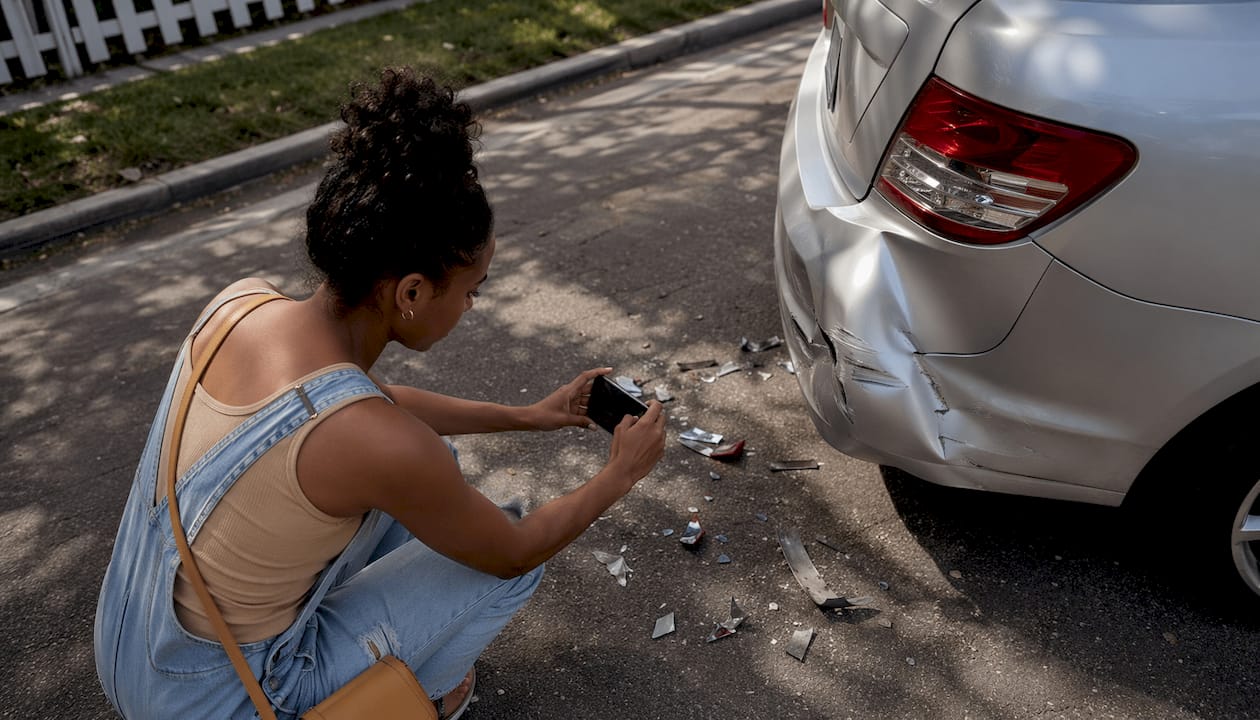
Pro Tip: If you were involved in an accident and the other party was not present, photograph the damage, document the location, and leave a legible note before you leave. Skipping this step converts a civil matter into a criminal one.
What are the hit and run penalties in California?
The penalties for a hit and run offense in California depend entirely on what the accident caused.
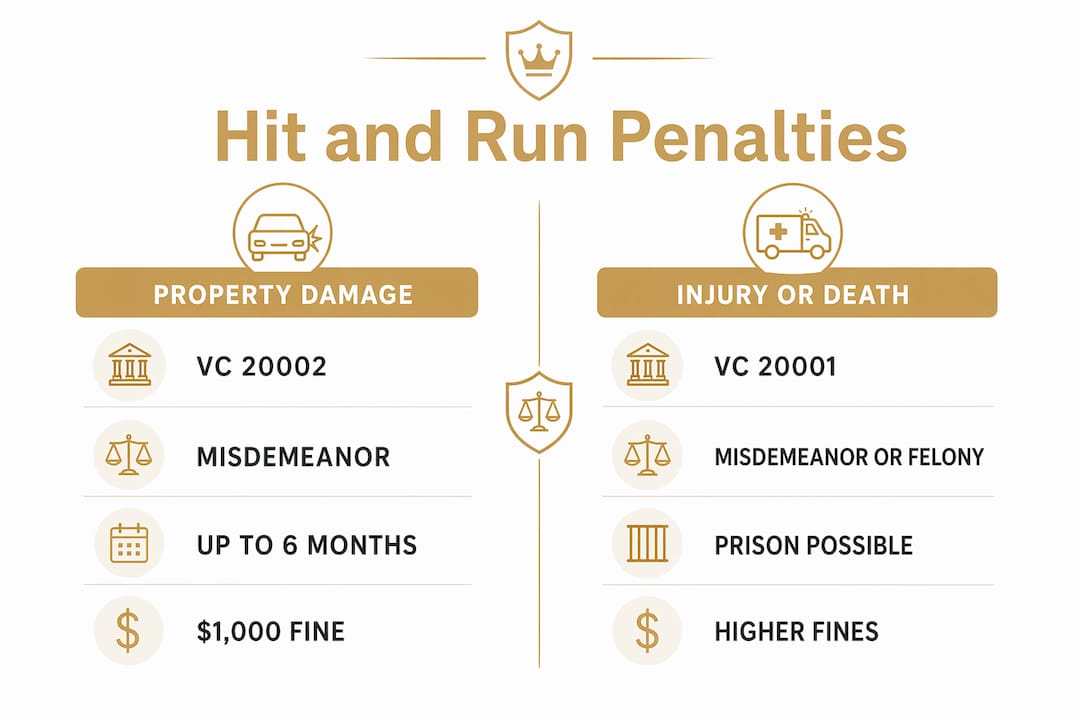
Property damage: VC 20002
VC 20002 is a misdemeanor punishable by up to six months in county jail and a fine of up to $1,000. Courts also add two DMV points to your driving record. Those two points matter more than most drivers expect.
Accumulating four points in 12 months, six points in 24 months, or eight points in 36 months triggers a six-month license suspension under California’s negligent operator system. A single hit and run conviction puts you nearly halfway to that threshold in one incident.
Injury or death: VC 20001
VC 20001 is a “wobbler,” meaning prosecutors can charge it as either a misdemeanor or a felony. The charge classification depends on injury severity, and early legal intervention can influence which direction prosecutors go. Felony charges carry 16 months to four years in state prison and fines up to $10,000. Understanding felony sentencing minimums in California helps put those numbers in context.
| Offense | Classification | Jail/Prison | Fine | DMV Points |
|---|---|---|---|---|
| VC 20002 (property damage) | Misdemeanor | Up to 6 months | Up to $1,000 | 2 points |
| VC 20001 (injury, misdemeanor) | Misdemeanor | Up to 1 year | Up to $10,000 | 2 points |
| VC 20001 (injury/death, felony) | Felony | 16 months–4 years | Up to $10,000 | 2 points |
Beyond criminal penalties, a conviction creates serious collateral damage. Insurance carriers treat hit and run convictions as high-risk events, which typically results in premium increases, SR-22 filing requirements, and in some cases, policy nonrenewal. You also face civil lawsuit exposure. The injured party can sue you separately for medical costs, lost wages, and pain and suffering, and a criminal conviction makes that civil case significantly easier for them to win.
Pro Tip: An SR-22 is not insurance. It is a certificate your insurer files with the DMV to prove you carry minimum coverage. Expect to carry it for three years after a hit and run conviction, and expect your premium to reflect that.
How does reporting affect hit and run claims and what are the critical deadlines?
Timing is the single most important factor in both criminal defense and insurance recovery after a hit and run incident.
For victims, the reporting clock starts immediately. Timely police reporting within 24 to 72 hours is the primary requirement for uninsured motorist claim approval. Insurers treat delayed reports as grounds for denial, and that denial is difficult to reverse. Filing a police report quickly also creates an official record that supports your version of events.
The steps for reporting a hit and run correctly are:
- Call 911 or your local police department immediately after the incident.
- File a formal police report within 24 to 72 hours, even if officers did not respond to the scene.
- File the SR-1 form with the California DMV within 10 days if the accident caused injury, death, or significant property damage.
- Notify your insurance carrier promptly and provide the police report number.
- Gather any available evidence: surveillance footage, dashcam video, witness contact information, and photographs.
For those accused of a hit and run, the statute of limitations determines how long prosecutors have to file charges. The time frame varies by severity: one year for misdemeanor property damage cases, three years for felony injury cases, and six years when the accident caused death or permanent injury. These windows are long. Assuming the matter has “blown over” after a few months is a common and costly mistake.
Police resources for property-damage-only cases are often limited, which means victims who want results must actively collect and submit evidence themselves. Dashcam footage, neighbor security cameras, and witness statements have all been used to identify drivers months after an incident.
What legal strategies should those accused of a hit and run consider?
The most effective strategy for anyone accused of a hit and run is to consult a hit and run lawyer in California before making any statements to police or insurers.
Early legal intervention matters most in VC 20001 cases. Because VC 20001 is a wobbler, prosecutors weigh available evidence and early statements when deciding whether to file a misdemeanor or felony charge. An attorney who engages before charges are filed can present mitigating facts, challenge the evidence, and sometimes prevent a felony filing entirely. The difference between a misdemeanor and a felony conviction is not just prison time. It affects employment, housing, professional licenses, and immigration status.
Viable hit and run defenses include:
- Lack of knowledge: You were not aware an accident occurred, which negates the intent element of the offense.
- Identity dispute: The prosecution cannot prove you were the driver.
- Emergency circumstances: You left to seek immediate medical help for yourself or a passenger.
- Necessity: Remaining at the scene posed an immediate safety threat.
A strong criminal defense also involves reviewing how evidence was gathered, whether witness identifications are reliable, and whether any constitutional rights were violated during the investigation. In some felony cases, AB 321 charge reduction may be available to bring a felony down to a misdemeanor before trial.
On the insurance side, avoid giving recorded statements to any insurer before speaking with an attorney. California’s pure comparative negligence system means fault is assigned proportionally, and anything you say can be used to shift a greater share of liability onto you. Even if the other driver fled, your own percentage of fault reduces your recovery.
Pro Tip: Do not assume that hiring a private attorney is out of reach financially. Many criminal defense firms, including Gracelegalgroup, offer free initial consultations. The cost of a consultation is far lower than the cost of a felony conviction.
Key Takeaways
A hit and run conviction in California carries criminal penalties, DMV consequences, and civil liability that compound quickly, making early legal action the most effective way to limit damage.
| Point | Details |
|---|---|
| Two separate statutes apply | VC 20002 covers property damage; VC 20001 covers injury or death, with much steeper penalties. |
| Reporting deadlines are strict | File a police report within 24–72 hours and an SR-1 with the DMV within 10 days to protect your rights. |
| VC 20001 is a wobbler | Prosecutors decide misdemeanor vs. felony based on injury severity and early evidence, making legal counsel urgent. |
| DMV points compound fast | Two points from a hit and run conviction can push you toward license suspension under California’s negligent operator rules. |
| Comparative negligence still applies | Fleeing the scene does not erase your share of fault for the original collision under California law. |
What I’ve learned from watching drivers misread hit and run law
Most drivers who flee an accident scene are not calculating criminals. They panic. They assume the damage is minor, that no one saw them, or that leaving quickly will make the problem disappear. Every one of those assumptions is wrong, and I have seen each of them make a bad situation dramatically worse.
The misconception that troubles me most is the belief that fleeing removes liability for the original crash. California’s comparative negligence rules do not work that way. You remain proportionally responsible for the collision itself, and now you have added a separate criminal charge for leaving. You have not reduced your exposure. You have doubled it.
The other pattern I see consistently is delayed reporting on the victim side. People assume they have time. They feel shaken, they go home, they sleep on it, and by the time they file a police report, their insurer has already flagged the delay. Insurers treat late reports as red flags, and claim denials follow. The 24 to 72-hour window is not a suggestion. It is the line between a paid claim and a denied one.
If you are on the accused side, the single best thing you can do is stop talking and start calling a lawyer. Prosecutors in VC 20001 cases pay close attention to early statements. Anything you say before you have legal counsel can and will be used to push the charge toward a felony. The wobbler nature of that statute gives your attorney real leverage, but only if they get involved before the charging decision is made.
— Jake
Gracelegalgroup can help you navigate hit and run charges in California
Facing a hit and run charge in California is serious, and the decisions you make in the first 48 hours shape everything that follows.

Gracelegalgroup is a Los Angeles-based criminal defense firm with direct experience handling both misdemeanor and felony hit and run cases. The team includes former law enforcement professionals who know how prosecutors build these cases and where the weaknesses are. Every client receives two dedicated attorneys, and the firm’s approach includes detailed mitigation work designed to change how prosecutors see your situation. You can review available criminal defenses or schedule a free consultation to discuss your specific charges. Gracelegalgroup handles cases with confidentiality, care, and a genuine commitment to second chances.
FAQ
What is the difference between VC 20002 and VC 20001?
VC 20002 applies when a hit and run causes only property damage and is charged as a misdemeanor. VC 20001 applies when the accident causes injury or death and can be charged as either a misdemeanor or a felony.
How long do prosecutors have to file hit and run charges in California?
The statute of limitations is one year for misdemeanor property damage cases, three years for felony injury cases, and six years when the accident caused death or permanent injury.
Will a hit and run conviction affect my driver’s license?
A conviction adds two DMV points to your record. Reaching four points in 12 months, six in 24 months, or eight in 36 months triggers a six-month license suspension under California’s negligent operator system.
What should I do immediately after a hit and run accident as a victim?
Call police right away and file a formal report within 24 to 72 hours. Delayed reporting is the leading cause of uninsured motorist claim denials, so acting quickly protects your ability to recover damages.
Can a felony hit and run charge be reduced to a misdemeanor?
Yes. Because VC 20001 is a wobbler, early legal intervention can influence the prosecutor’s charging decision. In some cases, AB 321 charge reduction may also apply to bring a felony down to a misdemeanor before trial.