
A rising BAC defense can work in your favor when your blood alcohol concentration was likely below the 0.08% per-se limit while you were driving but climbed above it by the time police tested you. That gap is real, it is scientifically documented, and courts across the United States have accepted it as a legitimate challenge to per-se DUI charges. The defense is most persuasive when three conditions align: you had your last drink shortly before driving, testing was delayed a substantial time after the stop, and your result landed close to the statutory threshold range.
Two cautions before you get your hopes up. Prosecutors can sidestep the numeric BAC entirely by pointing to impairment evidence, and many states use statutory 2–3 hour presumptions that treat the test result as your drive-time BAC unless you rebut it with affirmative evidence. Neither problem is fatal, but both require preparation. Preserve every receipt, timestamp, and piece of footage you can access right now, and contact a DUI defense attorney before dashcam and bodycam recordings are overwritten.
- The defense targets per-se BAC charges, not impairment-based counts.
- Viability depends on last-drink timing, test delay, and a borderline result.
- Statutory presumptions shift the burden to you to produce rebuttal evidence.
- Prosecutors will use field sobriety tests and officer observations to argue impairment regardless of the absorption timeline.
- Gracelegalgroup builds this defense with two-attorney teams and retained forensic toxicologists.
Pro Tip: Write down your exact drinking timeline, what you ate, and the times of every interaction with police as soon as you can after arrest. Memory fades fast, and that timeline is the foundation of any absorption-based defense.
Table of Contents
- What does the rising BAC defense actually argue?
- How does alcohol absorption actually work?
- When does the rising BAC defense matter in U.S. law?
- What evidence do you need to support a rising BAC claim?
- How does a forensic toxicologist build a rising BAC model?
- How do prosecutors fight back against a rising BAC claim?
- What should you do right now after a DUI arrest?
- What does building this defense actually cost?
- How does Gracelegalgroup handle rising BAC cases?
- Key Takeaways
- The gap between what this defense promises and what actually wins cases
- Gracelegalgroup is ready to review your case today
- Useful sources for defendants and their lawyers
What does the rising BAC defense actually argue?
The core claim is straightforward: the BAC the machine measured was not the BAC in your bloodstream while you were behind the wheel. Alcohol absorbed into your blood after you stopped driving pushed the number higher. The defense does not deny drinking; it argues the timing of absorption means the legal threshold had not yet been crossed at the moment that mattered.
This argument applies cleanly to per-se DUI charges, where the prosecution’s entire case rests on the numeric BAC result. It does not, on its own, defeat an impairment-based charge. If an officer documented slurred speech, failed field sobriety tests, or erratic driving, the prosecution can pursue conviction without leaning on the BAC number at all. Pairing a rising BAC theory with independent challenges to the test’s reliability gives you a much stronger position than either argument alone.
Common fact patterns where the defense arises naturally:
- Rapid drinking shortly before getting in the car
- Drinking during a trip (a beer at a gas station, for example)
- A heavy meal that slowed absorption, pushing the peak BAC later
- A borderline test result near the legal limit
Where the defense loses credibility quickly: a high measured BAC well above the legal limit, a test taken very soon after the stop, documented drinking that ended hours before driving, or video showing obvious impairment at the scene.
Pro Tip: If your test result was above 0.12%, discuss with your attorney whether a technical BAC challenge, a procedural defense, or a combination approach makes more sense than leading with absorption timing.
How does alcohol absorption actually work?
Alcohol typically reaches peak BAC 30–90 minutes after the last drink, but that window is not fixed. It shifts based on a cluster of individual variables, and understanding them is what lets a forensic toxicologist build a credible model for your specific situation.
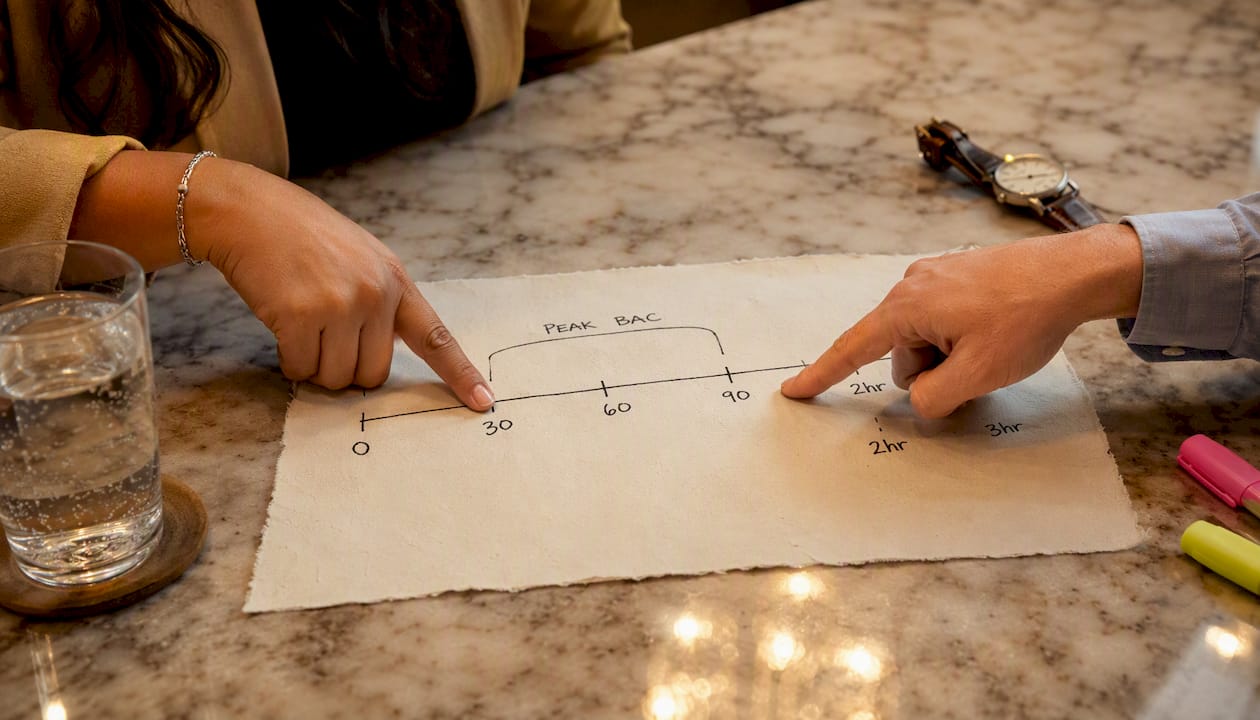
During the absorption phase, alcohol moves from the stomach and small intestine into the bloodstream. Your BAC rises. Once absorption is complete, the body shifts into the elimination phase, where the liver metabolizes alcohol at a relatively steady rate. The problem for prosecutors is that standard retrograde extrapolation, the math used to work backward from a test result to an estimated drive-time BAC, only holds up during the elimination phase. Applying that backward calculation across the absorption phase is methodologically unsound because the rate of change is not linear and depends on inputs the prosecution often does not have.
Variables that materially change where you fall on that curve:
- Food in the stomach: A full meal can delay peak BAC by 30–60 minutes or more.
- Drink type and concentration: Carbonated mixers accelerate absorption; high-fat meals slow it.
- Drinking rate: Rapid consumption compresses the absorption window.
- Body weight and composition: Lower body water percentage means higher peak BAC from the same amount of alcohol.
- Sex: Women generally absorb alcohol faster and reach higher peak BACs than men of equivalent weight.
- Stomach motility and medical conditions: GERD, gastroparesis, and certain medications alter how quickly alcohol leaves the stomach.
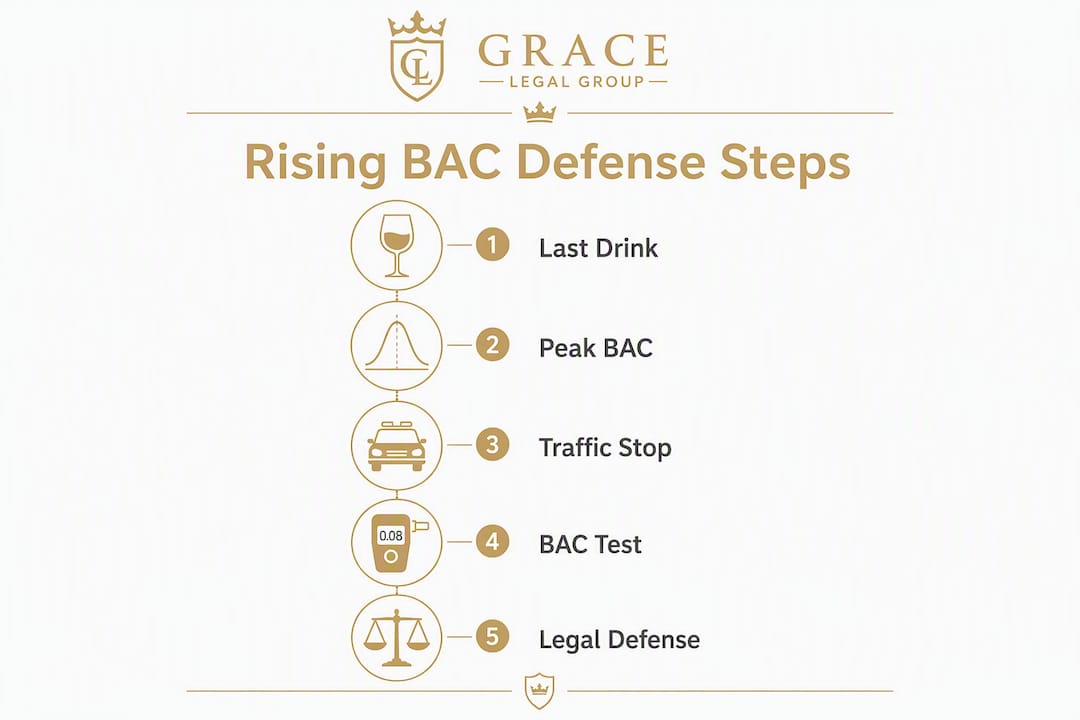
Think of the timeline as a curve, not a straight line. Last drink → driving → traffic stop → test. If the test falls on the rising portion of that curve, the number it captures is not the number that existed at the wheel.
Pro Tip: Tell your attorney about any medical conditions affecting digestion, any prescription medications you were taking, and exactly what and when you ate. These details directly affect what a toxicologist can model.
When does the rising BAC defense matter in U.S. law?
The defense is strongest in per-se cases where the prosecution’s proof is the numeric BAC result and nothing else. That is where statutory presumptions become the central legal battleground.
Many states have enacted “relation-back” or “within-X-hours” presumptions where, within a statutory window after driving, the test result is presumed to reflect the BAC at the time of driving. That presumption is rebuttable in most jurisdictions, but it shifts the burden: you must introduce affirmative evidence showing absorption was still incomplete. A bare assertion is not enough. A forensic toxicologist’s opinion, grounded in your specific timeline and physiology, is usually what courts require to overcome it.
| Scenario | Defense viability | Key factor |
|---|---|---|
| Test taken 60–90 min after stop, BAC near legal limit | High | Absorption likely still incomplete |
| Test taken soon after stop, BAC near legal limit | Low | Insufficient time for significant rise |
| Test taken later after stop, BAC well above legal limit | Low | Gap too large to bridge with absorption math |
| Test taken with delay, meal consumed | Moderate to high | Food delay supports absorption argument |
Admissibility of expert testimony adds another layer. Federal courts and most states apply the Daubert standard, requiring that expert methodology be scientifically valid, peer-reviewed, and reliably applied to the facts. Some states still use the older Frye standard, which asks whether the method is generally accepted in the relevant scientific community. Absorption modeling by a qualified forensic toxicologist passes both standards when the inputs are solid. Speculative retrograde extrapolation across the absorption phase often does not, which is why courts applying Daubert frequently exclude prosecution experts who try to use backward math without complete drinking-history data.
As a practical rule: tests taken shortly after the stop rarely support a rising BAC claim. Results well above the legal limit are usually too high for a credible absorption-based reversal, regardless of timing.
What evidence do you need to support a rising BAC claim?
The defense succeeds with a detailed, corroborated timeline showing when you had your last drink and documentation proving that testing was delayed long enough for absorption to continue. Without that, a toxicologist has nothing concrete to model.
Timeline and consumption records:
- Bar or restaurant receipts with timestamps
- Credit or debit card transaction records
- Text messages or phone call logs showing your location and timing
- Witness statements from bartenders, servers, or companions
- Surveillance footage from the venue or nearby cameras
Testing documentation:
- Exact timestamp of the breath or blood test (from the arrest report and instrument printout)
- Deprivation-period observation log for breath tests (the 15-minute pre-test observation window)
- Instrument calibration and maintenance records
- Operator training and certification records
Blood-specific records:
- Chain-of-custody documentation from draw to lab
- Lab quality assurance records
- Storage and refrigeration logs (fermentation in improperly stored samples can artificially inflate BAC)
Behavioral evidence:
- Dashcam and bodycam footage showing your demeanor, speech, and coordination
- Field sobriety test notes and video (absent or mild impairment indicators strengthen the absorption argument)
- Officer observations in the arrest report
| Evidence type | What it proves | Where to get it |
|---|---|---|
| Receipts and card records | Last-drink timing | Your bank, the venue |
| Instrument calibration logs | Test reliability | Discovery request |
| Deprivation-period log | Breath-test protocol compliance | Arrest report, discovery |
| Chain-of-custody records | Blood sample integrity | Lab, discovery |
| Dashcam/bodycam footage | Behavioral impairment (or lack of it) | Early preservation request |
Breath-test challenges include mouth alcohol contamination, observation-period failures, and instrument calibration gaps. Blood-test challenges center on chain-of-custody breaks, improper storage, and lab QA failures. Both categories of challenge can stand alongside an absorption argument, and together they force the prosecution to defend the case on multiple independent fronts.
How does a forensic toxicologist build a rising BAC model?
A forensic toxicologist converts your specific timeline and physiology into a probabilistic opinion about what your BAC was while you were driving. That opinion is usually the defense’s core proof. Rising BAC is scientifically complex and typically requires a toxicologist to model an individual’s absorption curve using specific consumption timeline data, not generic population averages.
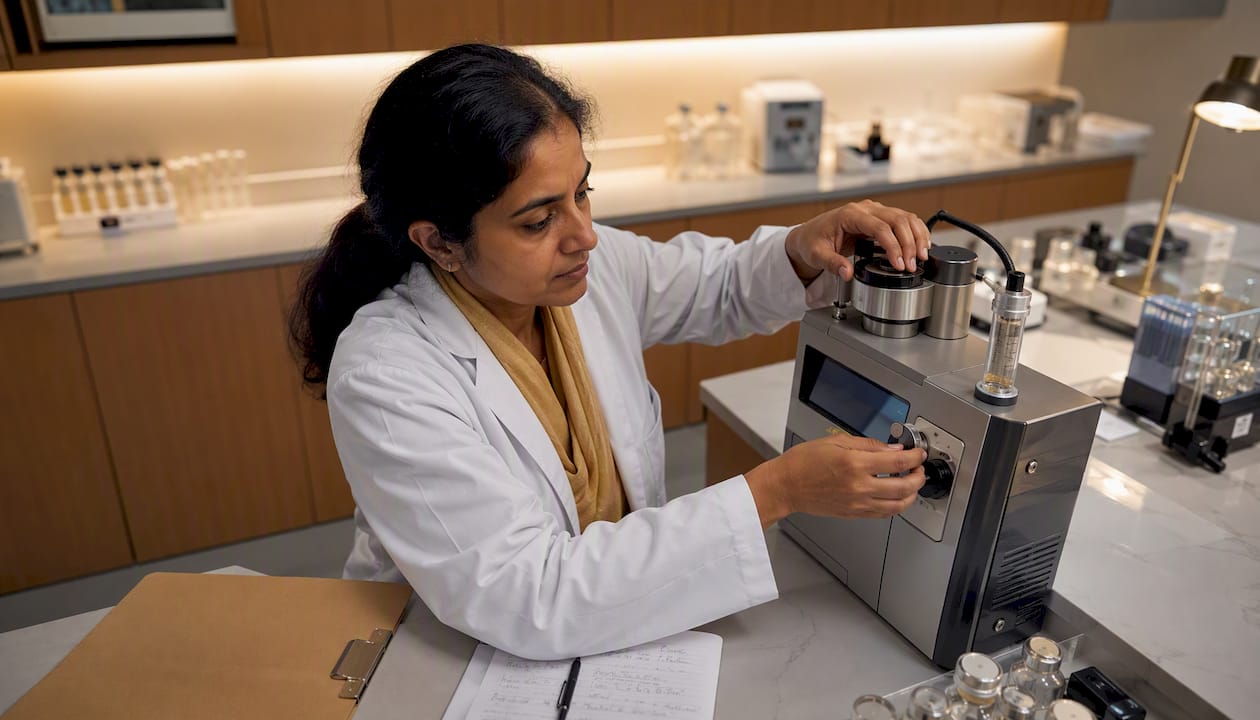
The expert will ask for: your body weight and sex, what you ate and when, the type and strength of each drink, the exact times you started and finished drinking, the timestamp of the traffic stop, and the timestamp of the test. From those inputs, they build a forward model, projecting how your BAC would have risen and fallen across the relevant time window. This is fundamentally different from retrograde extrapolation, which works backward from the test result. Backward estimation fails during the absorption phase because the rate of change is not constant and cannot be reliably reversed without knowing when absorption completed.
What a credible expert report contains:
- A clear methodology description citing peer-reviewed pharmacokinetic literature
- Sensitivity analyses showing how varying key assumptions (absorption rate, meal delay, drink strength) change the estimated drive-time BAC
- Confidence intervals, not a single point estimate
- A plain-language summary of conclusions and their limitations
A forensic toxicologist’s report that shows drive-time BAC was likely below 0.08% under a range of reasonable assumptions is far more persuasive than one that claims certainty. Courts and opposing experts focus on whether the sensitivity ranges are realistic and supported by the record — a narrow, well-defended range is stronger than a wide one that appears to cherry-pick favorable inputs.
When the prosecution’s own timeline is thin, vigorous cross-examination of their expert can sometimes expose fatal assumptions without a defense expert, a cost-effective tactic worth discussing with your attorney before committing to full expert engagement.
Pro Tip: Ask any toxicologist you consider hiring whether they have testified under both Daubert and Frye standards, and request a sample report so you can see how they present sensitivity analyses before you engage them.
How do prosecutors fight back against a rising BAC claim?
Prosecutors commonly counter by pointing to contemporaneous impairment evidence and using statutory presumptions or their own toxicology opinions to link the test result to your drive-time BAC. The numeric BAC is only one piece of their case.
Common prosecution pivots:
- Field sobriety test performance: Horizontal gaze nystagmus, walk-and-turn, and one-leg-stand failures are hard to explain away with absorption timing.
- Driving behavior: Weaving, speeding, or a collision before the stop suggests impairment at the wheel, regardless of what the absorption curve shows.
- Officer observations: Slurred speech, bloodshot eyes, and the odor of alcohol are noted in the arrest report and often captured on dashcam.
- Their own toxicology expert: The prosecution can retain a forensic toxicologist to argue that your drinking timeline, as they reconstruct it, places your drive-time BAC above 0.08%.
- Statutory presumptions: Within the statutory window, the burden shifts to you. If your rebuttal evidence is thin, the presumption holds.
The defense is weakest when: the measured BAC is well above 0.10%, the test was taken quickly after the stop, drinking ended long before driving, or dashcam footage shows clear impairment. In those situations, a rising BAC argument alone is unlikely to carry the case.
The strongest counter-strategy is to layer the absorption argument with independent technical challenges to the BAC evidence itself. If the calibration logs show a gap, if the deprivation period was not properly observed, or if the blood sample’s chain of custody is broken, the prosecution must now defend the reliability of the number and its timing simultaneously.
Pro Tip: If dashcam footage shows you walking steadily, speaking clearly, and following instructions without difficulty, that behavioral evidence is often more persuasive to a jury than any absorption calculation. Make sure your attorney requests and preserves that footage immediately.
What should you do right now after a DUI arrest?
Preserve evidence now. Dashcam and bodycam footage is routinely overwritten within days or weeks, and early attorney involvement is what preserves records before they disappear. Every hour you wait narrows your options.
Here is the priority sequence:
- Write down your complete drinking timeline while memory is fresh: what you drank, how much, when you started, when you stopped, what you ate, and when.
- Collect receipts and card records from every venue you visited. Screenshot digital receipts immediately.
- Note the exact timestamps of the traffic stop, any field sobriety tests, and the breath or blood test as recorded on your copy of the arrest paperwork.
- Contact a DUI defense attorney and ask them to send immediate preservation letters for dashcam, bodycam, and any surveillance footage from the area.
- Request discovery early: arrest report, breath or blood test printouts with timestamps, instrument calibration logs, deprivation-period observation records, and lab QA documentation.
- Identify witnesses who were with you before driving and get their contact information before memories fade.
- Check your state’s administrative license review deadline. Most states require you to request a hearing within 10 days of arrest to contest the automatic license suspension. Missing that window forfeits the right to a hearing regardless of how your criminal case proceeds.
- Start documenting your physiology: body weight at the time of arrest, any medical conditions affecting digestion, and any prescription medications you were taking.
Administrative license review deadlines are state-specific and unforgiving. For California defendants, the post-arrest timeline and administrative steps are worth reviewing immediately so you do not lose your license by default.
What does building this defense actually cost?
Building a rising BAC defense commonly takes weeks to months and costs more than most defendants expect before they ask. The range is wide because the cost drivers vary significantly by case.
What drives the cost up:
- Expert credentials: a board-certified forensic toxicologist charges more than a general lab scientist, but carries more weight at trial.
- Number of tests or samples: a breath test and an independent blood draw require separate analyses.
- Sensitivity analyses: a thorough report with multiple modeled scenarios takes more time than a single-point opinion.
- Trial testimony: an expert who testifies at trial charges for preparation, travel, and court time on top of the report fee.
- Case complexity: multiple prior offenses, a felony DUI charge, or a high BAC result all add layers.
Typical timeline landmarks:
- Expert review and initial report: roughly 2–6 weeks after the expert receives complete records.
- Prosecution expert exchange and rebuttal: additional weeks, often tied to pretrial hearing schedules.
- Pretrial hearings on admissibility: months, depending on the court’s docket.
- Trial, if it gets there: adds months more.
For a realistic picture of what attorney fees look like on top of expert costs, DUI defense cost expectations vary by case complexity, jurisdiction, and whether the matter resolves before trial. Ask any expert you consider hiring for a written estimate of services before engagement, and confirm whether that estimate includes trial testimony or only a written report.
How does Gracelegalgroup handle rising BAC cases?
Gracelegalgroup combines two-attorney case teams, former law-enforcement experience, and retained forensic experts to build timeline-driven BAC defenses from the first day of engagement. That structure matters because a rising BAC defense requires simultaneous tracks: evidence preservation, statutory deadline management, expert coordination, and layered technical challenges to the BAC evidence itself.
The firm’s former law-enforcement background shapes how cases are analyzed. Attorneys who understand how officers document field sobriety tests, how breath instruments are maintained, and where chain-of-custody gaps typically appear can identify weaknesses in the prosecution’s case that a generalist might miss. That same experience informs the mitigation packets the firm prepares, detailed narratives that reframe how prosecutors perceive a client before charges are finalized.
| Defense element | Gracelegalgroup’s approach |
|---|---|
| Evidence preservation | Immediate letters sent upon retention; dashcam/bodycam secured before overwrite |
| Expert engagement | Retained forensic toxicologist with Daubert/Frye testimony experience |
| Absorption modeling | Forward modeling using client-specific timeline, physiology, and consumption data |
| Technical BAC challenges | Calibration logs, chain-of-custody, deprivation-period compliance reviewed in parallel |
| Statutory deadlines | Administrative license review requests filed within state-specific windows |
| Client support | Two dedicated attorneys per case; faith-based, client-centered representation |
What to bring to your first meeting: every receipt and card statement from the night of the arrest, the arrest report if you have it, any paperwork from the breath or blood test, and your written drinking timeline. The more complete your records, the faster the firm can assess whether a rising BAC argument is viable and what expert work is needed.
What a DUI defense lawyer in California looks for covers the full scope of what Gracelegalgroup reviews during an initial case evaluation.
Pro Tip: Ask your attorney at the first meeting whether the firm has handled cases with similar BAC results and testing delays. Specific case experience with absorption-based arguments is not universal among DUI attorneys.
Key Takeaways
A rising BAC defense is viable when your test result was borderline, testing was delayed, and you can document a tight last-drink-to-driving timeline supported by a forensic toxicologist’s absorption model.
| Point | Details |
|---|---|
| Three viability tests | Short last-drink interval, delayed testing, and a borderline BAC result near 0.08–0.10%. |
| Statutory presumptions | Most states presume the test reflects drive-time BAC within 2–3 hours; you must rebut with affirmative evidence. |
| Expert testimony is central | A forensic toxicologist builds the forward absorption model courts require to overcome prosecution BAC evidence. |
| Layer your defense | Combining absorption modeling with technical BAC challenges forces the prosecution to defend on multiple fronts. |
| Gracelegalgroup’s role | Two-attorney teams with former law-enforcement experience and retained toxicologists handle evidence preservation and expert coordination from day one. |
The gap between what this defense promises and what actually wins cases
Most articles about the rising BAC defense read like a checklist of favorable facts: short drinking window, delayed test, borderline result. Check all three boxes and you have a defense. That framing undersells how much the outcome depends on execution rather than eligibility.
The science is real. Alcohol does rise after the last drink, and that rise can cross the legal threshold after a driver has already stopped. Courts accept this. But the defense lives or dies on the quality of the timeline reconstruction and the credibility of the expert who presents it. A toxicologist who presents a single-point estimate without sensitivity analysis will be torn apart on cross-examination. An attorney who waits three weeks to request dashcam footage may find it already overwritten. A defendant who cannot remember what they ate or when they had their last drink gives the expert almost nothing to work with.
The other thing most guides skip: the prosecution does not need to win on BAC at all. If the officer’s dashcam shows a defendant who cannot walk a straight line, slurs every other word, and smells strongly of alcohol, the per-se charge becomes secondary. A rising BAC argument that succeeds in creating doubt about the number can still lose to impairment evidence the defendant cannot explain away. That is why experienced DUI defenders treat this as one element of a layered strategy, not a standalone theory.
The clients who benefit most from this defense are the ones who act immediately, document everything, and work with attorneys who understand both the pharmacokinetics and the prosecution’s playbook. The science gives you an opening. What you do with it in the first 48 hours determines whether that opening stays open.
Gracelegalgroup is ready to review your case today
If you think a rising BAC argument might apply to your case, the window to act is short. Dashcam footage disappears. Instrument logs get archived. Witnesses forget details. Gracelegalgroup’s two-attorney teams begin evidence preservation the day you retain the firm, sending formal requests for bodycam, dashcam, and instrument records before those materials are gone.

The initial consultation covers your complete drinking and driving timeline, an assessment of whether your test result and testing delay support an absorption-based argument, and an engagement estimate that includes expert review. The firm’s former law-enforcement attorneys know exactly which records to request and which gaps in the prosecution’s documentation to target. For defendants facing a DUI charge in California, that combination of technical knowledge and immediate action is what separates a preserved defense from a missed one. Contact Gracelegalgroup now to schedule your case review and get your evidence preservation checklist before critical records are lost.
Useful sources for defendants and their lawyers
The rising BAC defense draws on pharmacokinology research, state DUI statutes, and expert admissibility standards. These sources are starting points. Expert analysis must always be case-specific, and no general resource substitutes for a qualified forensic toxicologist reviewing your actual records.
- NIAAA: Alcohol Metabolism — The National Institute on Alcohol Abuse and Alcoholism’s overview of how the body processes alcohol, including absorption and elimination rates. The foundational science behind any absorption-based defense.
- LegalClarity: Rising BAC Defense — Absorption Phase and DUI Challenges — Covers statutory presumptions, how they shift burdens, and what affirmative evidence courts expect to rebut them.
- Nolo: Do I Have Any Chance of Beating My DUI With a Rising Blood Alcohol Defense? — Plain-language explanation of how per-se charges interact with absorption timing.
- National DUI Authority: Rising Blood Alcohol Defense — Practitioner-focused overview of absorption timelines and the variables that affect them.
- TexasDWISite: The Rising Blood Alcohol Defense in Texas — Detailed treatment of retrograde extrapolation limits and cross-examination strategy for prosecution experts.
- Gracelegalgroup: What Happens After a DUI in California — Step-by-step post-arrest guide covering administrative license review deadlines and what to expect in the criminal process.
These sources are starting points for understanding the defense framework. The strength of your specific case depends on your timeline, your test result, and the records your attorney can obtain. A forensic toxicologist reviewing your actual data will tell you more in one hour than any general guide can.
This article provides general legal information, not legal advice. DUI laws and procedures vary by state. Consult a qualified DUI defense attorney and verify current rules with your state’s primary legal sources before making any decisions about your case.