
Understanding when a DUI become a felony is critical because it marks the difference between a manageable mistake and a life-altering legal crisis. While most first-time driving offenses are processed as misdemeanors, certain “aggravating factors” can push your case into the realm of felony territory. At Grace Legal Group, we believe that everyone deserves a second chance, but protecting that chance requires understanding the high stakes of a felony charge.
Misdemeanor vs. Felony DUI: Understanding the Threshold
In the eyes of the law, not all DUIs are created equal. The distinction between a misdemeanor and a felony usually comes down to the level of danger presented to the public.
- What is a Misdemeanor DUI? Most first or second offenses involving no injuries are charged as misdemeanors. While still serious, these usually result in local jail time, fines, and license suspension.
- What is a Felony DUI? This is often referred to as an “Aggravated DUI.” It is a much more serious crime that carries the potential for state prison time rather than local jail.
- The Role of Prosecutorial Discretion: Some states have “wobbler” laws. This means a prosecutor can choose to charge the crime as either a misdemeanor or a felony based on the specific facts of your arrest and your past behavior.
The Core “Aggravating Factors” That Trigger a Felony
Specific circumstances, known as aggravating factors, act as a bridge that moves a DUI from a misdemeanor to a felony.
Multiple Prior Convictions
Most states have a “look-back period”—usually between 5 and 10 years. If you are arrested for a DUI and have two or more convictions within that window, your third or fourth offense is almost always charged as a felony. The law views repeat offenders as a chronic risk to public safety.
Injuries and Fatalities
If an accident occurs while you are under the influence and someone else is hurt, the charges escalate immediately. “Serious Bodily Injury” (SBI) to passengers or other drivers can trigger felony charges. If a death occurs, you may face Vehicular Homicide or Manslaughter, which are among the most severe felony charges on the books.
Minors in the Vehicle
Having a child in the car while driving under the influence is a major red flag for prosecutors. Most states set the age threshold at 16 or younger. This often leads to “child endangerment” enhancements that can turn a standard DUI into a felony.
Extremely High Blood Alcohol Content (BAC)
While the legal limit is 0.08% in most places, having a “super-extreme” BAC (often 0.15% or 0.20%) can lead to increased penalties. In some jurisdictions, this high level of intoxication is enough to justify a felony filing.
Driving on a Restricted or Suspended License
If you were already prohibited from driving due to a previous legal issue, getting a DUI is seen as a flagrant violation of the court’s trust. Driving on a suspended or revoked license during a DUI arrest is one of the fastest ways to see your charges upgraded to a felony.
Administrative vs. Criminal Consequences
A DUI creates two separate battles: one with the criminal court and one with the Department of Motor Vehicles (DMV).
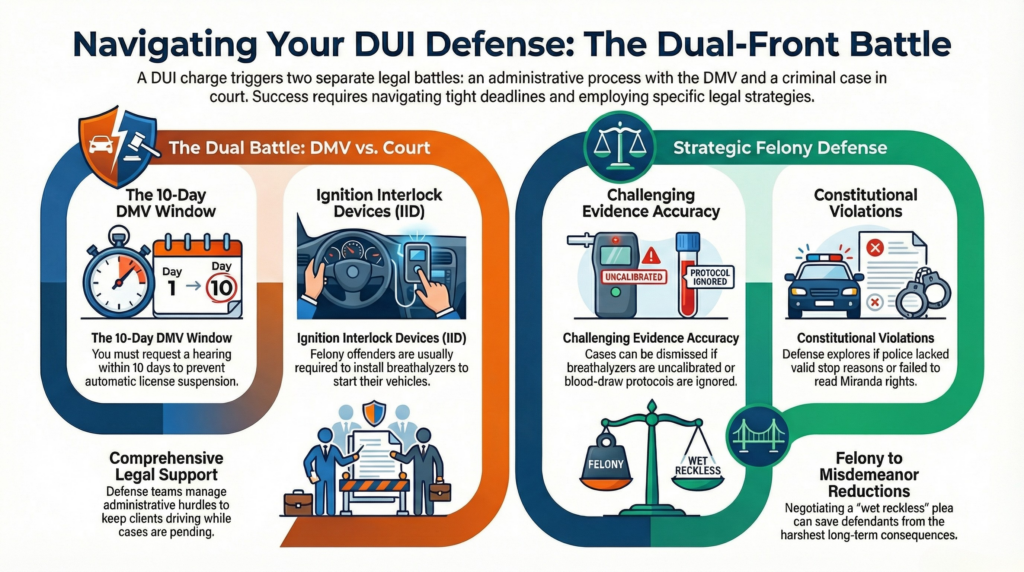
- The DMV Battle: Even before you go to court, the DMV may move to suspend your license. This is an administrative action that happens automatically unless you request a hearing within a very tight window (often just 10 days).
- Ignition Interlock Devices (IID): For felony offenders, courts almost always mandate the installation of an IID. This is a breathalyzer connected to your car’s ignition; the vehicle will not start if it detects alcohol.
- The Grace Legal Group Approach: Our team doesn’t just look at the criminal side; we help you navigate the administrative hurdles to keep you on the road and working while your case is pending.
The Long-Term Impact of a Felony Conviction
A felony stays with you long after you leave the courtroom. The consequences ripple through every part of your personal and professional life.
State-Mandated Penalties
Felony convictions often require a mandatory minimum sentence in state prison. You will also face thousands of dollars in fines, lengthy probation, and mandatory drug or alcohol treatment programs.
Loss of Civil Liberties
When you are convicted of a felony, you lose rights that many take for granted:
- Firearm Ownership: Under federal law, felons are generally prohibited from owning or possessing firearms.
- Voting Rights: Depending on your state, you may lose your right to vote while incarcerated or on parole.
- Jury Service: Felons are often disqualified from serving on a jury.
Professional and Financial Fallout
A felony on your record is a red flag for employers. It can lead to the loss of professional licenses in fields like nursing, law, teaching, or commercial driving (CDL). Furthermore, since many landlords run criminal background checks, finding a place to live can become significantly harder.
International Travel Restrictions
A felony DUI can even stop you at the border. Many countries, most notably Canada, have strict policies against admitting individuals with felony convictions. You may be turned away at the airport or border crossing, regardless of the purpose of your trip.
Felony DUI Defense Strategies
Being charged with a felony does not mean you will be convicted of one. There are several ways an experienced legal team can fight these charges.
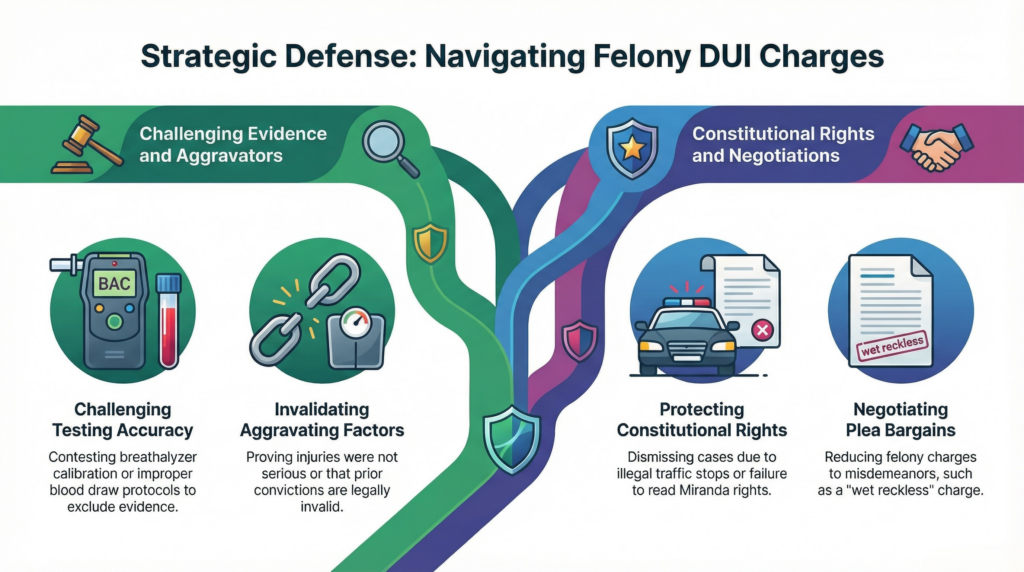
- Challenging the “Aggravating Factor”: We look for ways to prove the “injury” wasn’t as serious as claimed or that a “prior conviction” is legally invalid due to past procedural errors.
- Inaccurate Testing: Breathalyzers must be calibrated perfectly, and blood draws must follow strict medical protocols. If the police cut corners, the evidence may be thrown out.
- Constitutional Violations: If the police didn’t have a valid reason to pull you over, or if they failed to read you your Miranda rights, the entire case could be dismissed.
- Plea Bargaining: In many cases, “Grace Legal Group” can negotiate with prosecutors to have a felony reduced to a misdemeanor (often called a “wet reckless“), saving you from the harshest long-term consequences.
People Also Ask (FAQ)
Can a felony DUI be reduced to a misdemeanor?
Yes. Through plea bargaining or by proving that the aggravating factors (like the severity of an injury) were overstated, a skilled attorney can often get charges reduced.
How long does a felony DUI stay on my record?
In most states, a felony DUI stays on your criminal record permanently unless you are eligible for an expungement or record sealing, which varies heavily by state law.
Will I lose my job if I get a felony DUI?
Many employment contracts have “morality clauses” or require a clean criminal record. While not every job is lost, a felony conviction makes maintaining certain professional licenses very difficult.
Can I travel to Canada with a felony DUI?
Generally, no. Canada considers a DUI a serious crime. You may be deemed “inadmissible” and barred from entry unless you apply for special rehabilitation permits.
What is the “look-back period” for DUIs?
The look-back period is the window of time (usually 7 to 10 years) that the court looks at to see if you have prior offenses. If you have multiple offenses within this window, the current charge is often upgraded to a felony.
Seek Redemption with Grace Legal Group
A felony DUI charge can feel like the end of the road, but at Grace Legal Group, we believe your story isn’t over. We specialize in providing faith-based, aggressive representation for those facing the most serious criminal charges. Our investigative team of former law enforcement professionals reviews every detail of your arrest to find the weaknesses in the prosecution’s case.
Don’t let a mistake define your entire future. If you are facing a DUI that has been elevated to a felony, you need a team that fights for a second chance.
Contact Grace Legal Group today for a 100% free consultation. Protect your rights, your family, and your future.